
Manifesto
My Manifesto is a research project where I explore my personal values and analyze how that is reflected in my role as a designer. This is done with ethics in mind and leads to a physical representation of the manifesto.
Who are you as a designer? What are your values? How do you keep ethics in mind?
Research
I took a couple different approaches to discover what values I hold and reflect on them.
Ethical dilemmas - Proposing ethical questions and answering them according to my values/opinion.
Schwartz values test - Testing what I value most according to the ten Schwartz value types.
Human rights evaluation - Evaluate what my three most valued human rights are.
Jung Archetypes test - Testing what archetype I am according to the Jung archetypes and formulating a new personal archetype.

Values analysis
To research my values I used the Schwarz values test which measures values based on ten values types: achievement, benevolence, conformity, hedonism, power, security, self-direction, stimulation, tradition, and universalism.

The Schwartz test revealed that Universalism is my highest value types. Universalism is defined as: "Understanding, appreciation, tolerance and protection for the welfare of all people and nature". This type is marked by equality, broad minded and peace. These values are something I really identify with as I have always been brought up by my parents with an appreciation and respect of nature, animals and other people.
The next value type is Benevolence; "Preserving and enhancing the welfare of those with whom one is in frequent personal contact." This type is marked by values like honesty, true friendship and loyalty. I am a very social and caring person and I value building connections with others. Especially the people close to me know they can always count on me.
The third value type is Self-direction: "Independent thought and action - choosing, creating and exploring". This type is marked by self-respect, creativity and freedom. I am of strong opinion that everyone should be free to choose their own path in life. This way people can discover what motivates them, brings them joy and find what makes them unique. This helps develop their own identity and build self-respect.
Source: (OLCreate: Promoting Sustainability in Business 3 A Values-based Approach To Engagement (1/2): Concepts: 3.2 The Theory Of Basic Human Values | OLCreate, z.d.)
My conclusions of the Schwartz test is that my highest values are: equality, peace, honesty, connection and freedom. When I reflect on my work as a designer, I see these values. I always make sure to look at the full picture to see a design problems from all sides. All the steps are always in connection with the users, here everyone is equal and all input is valued.

Archetype analysis
Definition according to Jung: "Archetypes are universal, inborn models of people, behaviors or personalities that play a role in influencing human behavior".
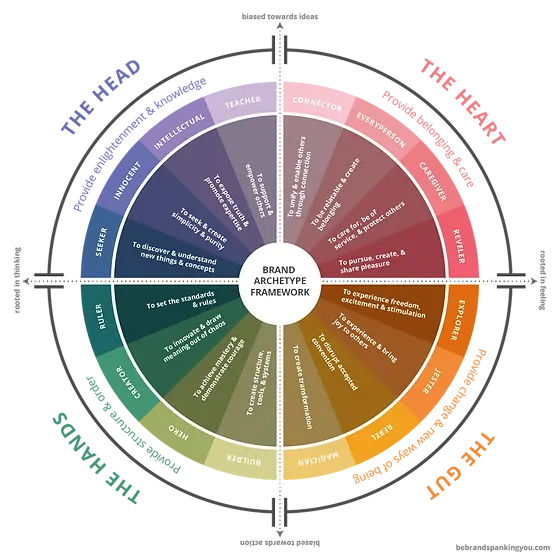
The results of the Jugian Archetype test concluded that I matched the highest with; "The Innocent Child" (73,5%).
The values of the Innocent Child Archetype:
"Joy and harmony. The Innocents number one goal is happiness. That's what they want for them selves and for everybody else."
"Simplicity. The Child resists paradoxes. In their mind, there is a clear line between right and wrong, and every problem has a solution."
"Morality. An Innocent character abides by a moral code. They always want to do the right thing and expects the same from others."
Source: Wurdeman, A. (2022). The innocent archetype - Everything you need to know. Dabble. Https://www.dabblewriter.com/the-innocent-archetype/ .
The values of the Innocent Child Archetype align with Schwartz’s value types of Universalism and Benevolence. I can conclude that I value creating happiness and peace for myself and others, and through that, contributing to a better world. Here inclusivity is most important to me.
As a designer, this is reflected in my passion for developing solutions for real-world problems while embracing all perspectives.
I aim to create products that work for everyone and actually make a difference.
Tree of Inclusivity
As a designer, my core value is inclusivity. I believe in equal rights and opportunities for everyone, and I aim to create products that are accessible to all users.
In my manifesto, I express this through the Tree of Inclusivity: the roots represent my own values, and the leaves symbolize those of my users. Together, they show how everything is connected and inclusivity lies at the heart of my design.
For my project, I used a Tree of Life design. I painted it to create a background for my own values and the leaves representing user values.
To collect these, I asked potential users in a coffee shop to write down a few personal values on the leaves. This visualization gives both me and others insight into what users find important.
From studying what people wrote on the leaves, I noticed many people value acceptance, openness, and joy. Even when talking to all different kinds of people, it shows that our values connect us. This is the message I want my manifesto to bring forward. By understanding each other’s values, we can design more inclusively.


The importance of research
Research is the foundation of meaningful design. It allows me to truly understand the needs, values, and experiences of users before creating solutions for them. I love this process because it lets me explore different perspectives, uncover real problems, and find insights that guide my creative decisions.
For me, research is not just a step in the design process, it’s an opportunity to connect with people and ensure that what I design is relevant, inclusive, and impactful.